
Case study: Wombat Housing: An AI-powered ChatBot to Provide Urgent Assistance to People Experiencing or at Risk of Homelessness
Wombat Housing Support Services, a frontline homelessness organisation in Melbourne, found itself grappling with the realities of a system under immense strain. With a housing crisis driven by skyrocketing rental prices and rising living costs, homelessness rates had surged.
Between 2016 and 2021, Melbourne alone saw a 17% rise in homelessness, a figure that has likely climbed even higher post-pandemic, putting extra pressure on frontline workers (ABS, 2021).
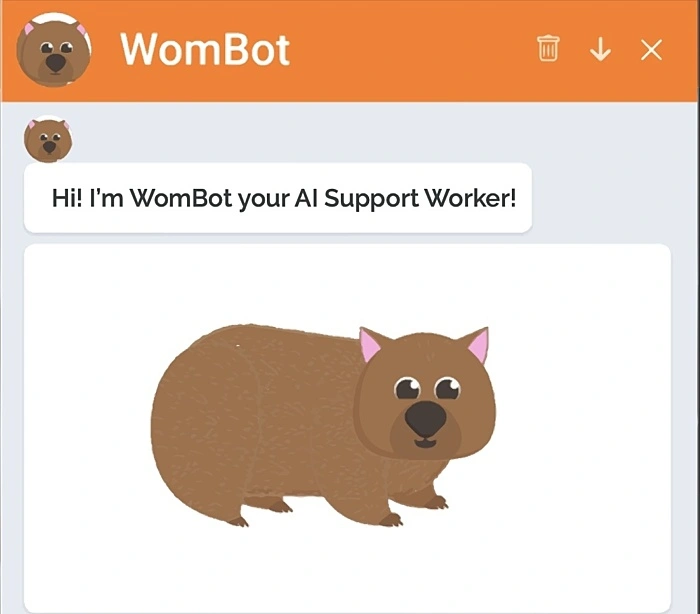
Lenka Brazda, a self-described "action learner," recognised that the traditional way of doing things was no longer sustainable. Having dabbled in IT projects before, she saw an opportunity to leverage technology not just for efficiency, but for compassion and accessibility. In response, she developed "WomBot" – an AI-powered chatbot designed to support people before they reach crisis point.
"I'm one of those people that flies the plane while building it. That's how I love to do projects," Lenka explained.
The project began with a simple online form to test demand. Within the first week, without any promotion, five self-referrals came through. Encouraged by this early uptake, Wombat Housing built a scripted chatbot to help users navigate the complex homelessness system. However, Lenka quickly observed the limitations: it was rigid, impersonal and unable to handle nuanced queries.
"It was giving all the right information, but it wasn't personalised. People kept asking it questions that it was never going to be able to answer because it was decision tree-based."
The emergence of generative AI presented a new path. With funding from the Lord Mayor’s Charitable Foundation, Lenka led the development of a smarter chatbot powered by AI. This new version, WomBot, could understand open-ended questions and offer more personalised support – all while alleviating pressure from frontline staff.
WomBot was developed through a collaborative, real-time co-design process with frontline workers and people with living experience. Guided by strong ethical oversight and a commitment to cultural competence, WomBot has been designed to enhance, not replace, human support. It provides timely information and guidance while ensuring qualified professionals remain central to care and decision-making.
The Results
Since its soft launch in October, WomBot has processed over 760 user queries. Critically, 84% of users said they preferred speaking to the chatbot over a caseworker. Over 65% of sessions occurred after hours, aligning with WomBot’s primary goal: making help available when services are typically closed. The bot achieved a 90% automation rate, meaning the majority of queries were resolved or redirected without needing staff involvement.
"We had someone up to the age of 70 who's used it. That to me is quite interesting, and why wouldn't we offer more ways for people to be able to reach out to get support?"
One surprising insight was the age range of users. While initially targeted at youth, usage data revealed a broad spread across demographics – including users in their 70s. Even frontline workers have adopted WomBot as a resource, underscoring its broader system value.
Challenges and Innovation
Developing the AI component was far from plug-and-play. Generative AI's creativity had to be carefully constrained to ensure safety and consistency. Lenka spent months fine-tuning prompt engineering to prevent hallucinations, ensuring fallback responses and correct referral pathways.
"Initially when we got the funding, I thought this will be so easy – I'll just integrate it in and I don't have to do anything. No – it was very, very difficult."
WomBot does not have access to the entire internet, instead relying on a carefully curated knowledge base and prioritising user safety. For example, when a user asked about cyclone safety, WomBot recognised the topic was outside its scope but still offered support and directed the user to appropriate resources. WomBot provides users with verified information and refers them to trusted platforms such as Ask Izzy and Justice Connect’s Dear Landlord.
Sustainability remains a key concern. Although initially grant-funded, Lenka designed the system with affordability in mind, using modular components and integrations that can be maintained with limited resources.
Significance and Future Impact
WomBot represents a breakthrough in how not-for-profits can meet growing demand with fewer resources. By offering immediate, accurate information at any hour, WomBot not only improves user experience but helps prevent crises before they escalate.
"Start small. They can act as building blocks later on. You don't have to do the big thing now."
Building on this early success, work is now focused on further refining WomBot and exploring opportunities to expand it’s use across the community sector.
Measureable impact:
-
95% of enquiries successfully resolved: demonstrating AI’s accuracy and reliability in providing information
-
90% high user rating: with an average satisfaction score of 4.6/5, confirming positive user experience
-
84% first contact tool: users engaged with WomBot before seeking human support
-
97% users found WomBot easy to use: increasing digital accessibility for clients
If you would like support with your organisation’s AI strategy, you can book a consultation with a member of our expert team, who will help you unlock the potential of AI based on your needs. You can also access a range of learning resources, by heading to the ‘My learning journey’ tab.