
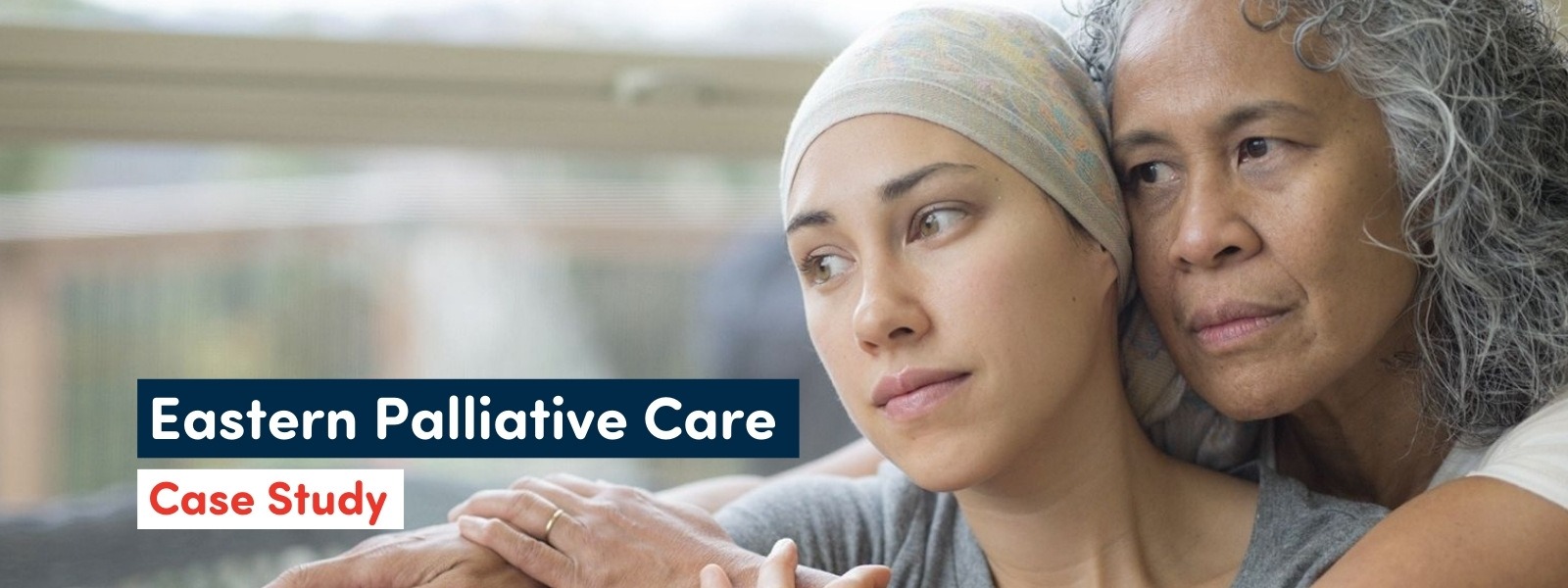
Case study: Dignity through story with Eastern Palliative Care
Providing dignity through specialist in home care, Eastern Palliative Care (EPC) is a distinguished not-for-profit organisation dedicated to providing comprehensive end-of-life care to those in the last year of their life. The organisation operates with a commitment to supporting individuals in the final stages of life, ensuring that they receive compassionate and holistic care.
One of the standout features that EPC provide to clients, is its biography services. This initiative allows individuals to document their life stories, thoughts, and experiences, creating a lasting testament of their journey. The biography services are designed to help clients articulate their memories, values, and personal narratives and ensure that future generations can connect with their history and heritage, all in the clients’ own words.
One of the (currently) 100 volunteers will sit with clients in one-on-one, one-hour sessions, listening and transcribing their stories, and roughly 4 hours a week on writing the biography manuscript, depending on the individual volunteer’s writing speed. With over 1700 biographies written since 2009, it can be a time-consuming process. Coordinator of Volunteers, Penelope Di Sario, noticed the opportunity that Artificial Intelligence (AI) could provide in the biography process, “I've worked for a lot of not for profits and there's never the resourcing that you need, so anything we can do to streamline our work or find ways to do things smarter and quicker with less, is in my eyes better as long as it's done sensibly.”
Prior to the addition of AI to the process, volunteers would either need to be quick at typing, or need to record on their phones to transcribe the audio at a later stage. “We had one biographer who had fibbed and said ‘oh yeah, just takes me a couple of hours,’ but then later admitted that it took him three full days to type up one client visit transcript, which is not suitable.” To help ensure that the volunteers’ time was spent engaging with clients, rather than admin, Di Sario looked for ways to help improve the connection between clients and volunteers during the short time that they spend together.
Benefits
AI looked poised to help alleviate some of the stress that time had placed on volunteers and allow them to connect with clients in a more effective manner. “We've been doing this for 15, 16 years, so about four years ago we got approval from the organisation to use AI, which is fantastic.” EPC approved volunteers to use an AI transcription tool that uses machine learning and artificial intelligence to match the speaker’s voice and tone as closely as possible, and convert it to text. “Each of these (biographies) can take, you know, 3-4 months at a time to do, working initially with a person and sometimes their family,” Di Sario explains.
“We’re working with people in in quite difficult circumstances, so we’re trying to make sure we protect the volunteers’ time and mental energy to keep it to focusing on their work directly with the client if we can.”
When asked if there was hesitance from volunteers when it came to using AI when transcribing, Di Sario noted that, “volunteers in this space are pretty savvy, I have to say, and they're all people who are pretty aware of what's going on in the world and it just seems to be a cohort that are very and engaged with change and you know some of these things.” Volunteers with EPC have been quite happy to utilise AI in the biography process, with many seeing a reduction in time spent on transcribing.
“I think it's often the volunteer teams in not-for-profit organisations that are first off the mark at trying new things, new technologies because it's because they have to.”
Advice
Like many not-for-profits, EPC faces challenges related to resource allocation and operational efficiency. The organisation has embraced AI tools to help streamline processes and enhance the volunteer experience. “I think most people out there are probably a little bit afraid still of AI, and a lot of organisations will be scrambling, particularly not-for-profits. That we can upskill fast, even some of the learning now online is amazing with what you can learn with a bit of help from AI, it allows us to be smarter about the way we work to give us more time,” Di Sario stated. “And if organisations haven't really got on the bandwagon yet with AI strategy, it's something that coordinators are going to be doing. So anything and any support from professionals that is available, why would you not use that?”
If you would like support with your organisation’s AI strategy, you can book a consultation with a member of our expert team, who will help you unlock the potential of AI based on your needs. You can also access a range of learning resources, by heading to the ‘My learning journey’ tab.